
Obedience training was never going to be enough.
Your dog knows how to sit.
Maybe he can lie down, stay, leave it and come when called too.
Until you actually need him to.
You've probably already lived this:
The walk where you spot another dog before yours does and immediately start figuring out where you're going to escape to.
Calling your dog only to watch him blow straight past you because a squirrel, dog or interesting smell has suddenly become far more important.
Guests arriving and the whole house descending into mayhem while you're trying to talk, manage your dog and apologize at the same time.
Sitting on a patio wondering why everyone else's dog seems capable of just… lying there.
Practicing recall over and over at home, only to discover that apparently your dog has never heard the word “come” before at the beach.
Coming home from a walk more stressed than when you left and wondering what you're supposed to be doing differently.
And maybe the most frustrating part?
You have trained your dog.
You've taken the class. You've practised the exercises. You've watched the videos. You've brought the good treats.
And your dog may genuinely know what you're asking.
The problem is that the moment the world gets exciting, frustrating, scary or unpredictable, all of that training seems to disappear.
That's not because your dog is stubborn, dominant or difficult.
And it's not because you haven't trained hard enough.
Your dog is missing the skills that allow him to use what he knows when real life gets hard.
When a dog is mentally swinging from the chandelier, there isn't much room left for thinking. That's why asking for another sit, drilling more repetitions or correcting the behaviour harder doesn't necessarily solve the problem.
Before we can expect your dog to listen when another dog appears, come back when there's a squirrel in front of him, or settle while your friends are having dinner, we need to build the dog who is actually capable of doing those things.
That means teaching him how to notice something exciting without immediately launching toward it.
How to come away from something he desperately wants.
How to get excited without going from zero to 100.
How to recover when something startles or overwhelms him.
How to stay connected to you when the environment gets more interesting.
And how to come back down again instead of staying wired long after the exciting thing is over.
Those are skills.
And skills can be built.
We don't start by putting your dog into the hardest situation and hoping he'll make a better choice this time.
We build those abilities in small, achievable pieces and progressively take them into real life—until the things that once felt impossible start becoming manageable.
Because the goal isn't a dog who can perform perfectly in your living room.
It's being able to walk down your street without bracing yourself every time another dog appears.
It's having friends over without your entire evening revolving around managing your dog.
It's sitting at a café and realizing your dog has actually settled beside you.
It's unclipping the leash on a hike and feeling confident that when you call, your dog knows how to turn away from the world and come back to you.
It's watching your dog encounter something difficult, recover, and carry on.
That's what we build inside Beyond Obedience.
Not more commands.
Not hours of drilling behaviours your dog already knows.
We build the skills underneath the behaviour so your dog can actually access what he's learned when you need it.
Every plan is built around your dog, your goals, and the real-life environments you actually want to enjoy together.
Let's figure out what your dog needs.
Ready to stop guessing what your dog needs?
Start with a Behaviour Assessment — $67. Your assessment fee is applied to Beyond Obedience if you continue with the program.
I've been where you are.
When my own dog started slipping toward reactivity after being attacked, I felt the same mix of frustration, guilt, and dread you might be feeling right now. Walks felt tense. I was constantly scanning the environment, bracing for the next trigger. At home it felt like I was always managing something, barking at hallway noises, pacing, whining, shadowing me from room to room.
I remember thinking: is this just what life with my dog is going to be now?
It doesn't have to be. And understanding why your dog is struggling, really understanding it, not just slapping a label like "reactive" or "dominant" on it, is where you feel empowered again and start seeing the solution as achievable.
That's the whole point of the Behaviour Assessment. Before we ever talk about a training plan, I want to understand your dog. What's driving the behaviour, what skills are missing, what your dog actually needs to succeed. Forty-five minutes on the phone, no pressure, and you'll leave with clarity on exactly what's going on and what the right next step looks like — whether that's working together or not.
Because your dog doesn't need more obedience drills. They need someone to get to the root of what’s actually going on.
That's what the Assessment is for.
Stop guessing. Let's figure out where I'd start with your dog.
Behaviour Assessment — $67

Helping Victoria dog owners turn stressful walks and reactive behaviour into calm, confident dogs. Multi-Certified Pro Dog Trainer & Level 6 OfQual Diploma Clinical Applied Behaviour Canine 2027

Herbie, Sam & Marvin
"We started doing game-based training with Marvin a couple of months ago and he has been making great progress every day. I can finally win his attention over another dog in the park."
Raven M. & Bentley
"I have seen such a difference in my dog. Training for the situation instead of in the situation. I am more equipped and feel more confident because of her. I highly recommend Samaya."
Susan & Bella
"The time I spend with Bella in games has made a huge impact. She loves her bed, she's eating better since we made a game of it, and her recall has improved greatly.”

How It Works
How it works
Step 1: Start with a Behaviour Assessment — $67
We'll spend 45 minutes talking through what's happening with your dog, where things tend to fall apart, what you've already tried, and what you want everyday life together to look like instead.
By the end of our call, you'll have:
✔ A better understanding of what may be contributing to the behaviour and why the things you've already tried may not be working
✔ My recommendation for where I'd focus first so you're not trying to fix everything at once
✔ A written recap of your dog's priority areas and recommended next steps, yours to keep regardless of whether we continue working together
If Beyond Obedience is the right fit, I'll recommend which level of support makes the most sense for you and your dog and explain what I'd want us to work on first.
You won't have to figure out which option you need before we talk.
If you continue into either Beyond Obedience program, your $67 assessment fee is applied toward the cost of your program.
Step 2: Choose your level of support
There are two ways to work through Beyond Obedience.
The training principles are the same. The difference is the level of individual coaching and feedback built into the program.
Beyond Obedience: Private Coaching
For the dog parent who wants me right there with you — watching what's happening, coaching you in the moment and adjusting the plan as your dog progresses.
Beyond Obedience: Guided Implementation
For the more independent dog parent who is comfortable doing the hands-on training, but wants my expertise, video feedback and troubleshooting when the details get tricky.
Not sure which one you need? I'll recommend the level of support I think makes the most sense during your Behaviour Assessment.
Step 3: Build it. Then take it into real life.
Lasting behaviour change doesn't come from getting an exercise right once.
We start by building the skills where your dog can actually succeed. Then, as those skills get stronger, we progressively take them into the situations where you need them — your neighbourhood walks, guests coming through the door, busier environments, patios, trails and the distractions that currently make everything fall apart.
Most clients begin noticing changes within the first few weeks. The longer support period gives us time to build on those early wins and help the skills become more reliable across different environments and increasingly difficult situations.
Because the goal isn't for your dog to be brilliant at a training game in your living room.
It's for you to actually be able to use it when real life happens.
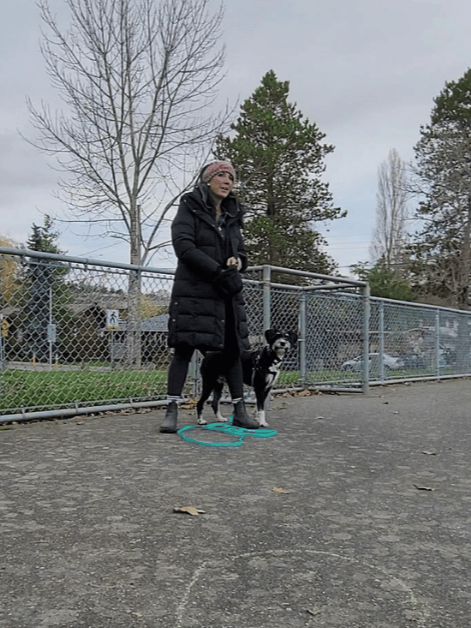
If progress has felt frustratingly slow in the past, there's usually a reason.
And it may have a lot less to do with how hard you've been trying than you think.
Every event we host is designed with intention, from the atmosphere we create to the way each session flows.
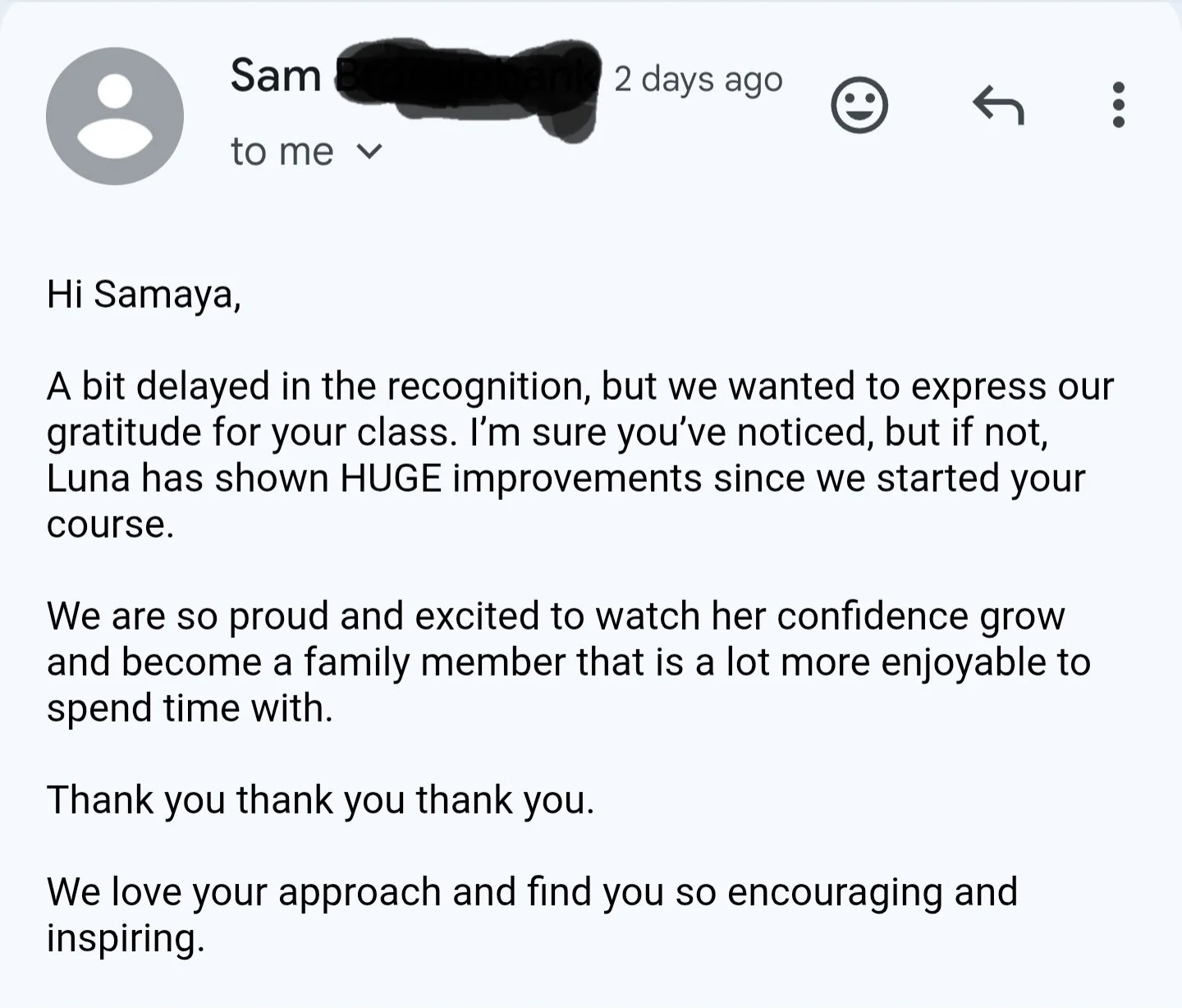
What Clients Often Start Noticing Within the First Few Weeks
Progress doesn't happen overnight. But often, the first changes aren't dramatic — they're the little moments that make you realize something is starting to shift.
Your dog sees another dog on a walk and looks back at you instead of immediately losing their mind
You're spending less of the walk pulling, redirecting, negotiating or trying to get your dog's attention back
Your dog gets worked up, but comes back down sooner instead of carrying it for the rest of the walk
You start recognizing when your dog is getting overwhelmed before everything falls apart
When something doesn't go to plan, you have an idea of what to change instead of wondering whether you're making things worse
At home, your dog starts spending more time actually resting instead of pacing, barking, following you around or looking for the next thing to react to
And sometimes the first big change isn't even in your dog.
It's realizing you finally know what to do.
Instead of trying another tip from Instagram, changing strategies every week or wondering whether you're somehow doing this wrong, you have a plan that makes sense for the dog standing in front of you.
That alone can make life together feel a whole lot lighter.
Ready to stop guessing?
Behaviour Assessment — $67
Why does your dog know what to do... until you actually need them to do it?
Most of the dogs who come through Beyond Obedience have been trained before.
They know sit. They know down. They may have graduated from obedience class with flying colours.
And then a dog appears across the street and suddenly none of it seems to matter.
That's because knowing a behaviour and being able to access it when you're excited, frustrated, worried or overwhelmed are two very different skills.
Think about your own brain.
Knowing how to solve a problem when you're sitting comfortably at home is very different from trying to solve that same problem when you're stressed, distracted and running late.
Your dog isn't so different.
That's why simply practicing the cue more isn't always the answer.
Alongside the behaviours you want — recall, loose-leash walking, settling, coming away from distractions — your dog may also need to learn how to:
Notice something exciting without immediately acting on it
Come away from something they really want
Handle frustration when they can't have something
Recover after something startles or overwhelms them
Get excited without going from zero to 100
Reconnect with you when the environment becomes more interesting
Come back down again after they've been worked up
That's the training underneath the training.
As those skills get stronger, the behaviours you've been asking for become easier for your dog to actually access — not just in your living room, but in the moments when you need them most.
That's the foundation of Beyond Obedience.
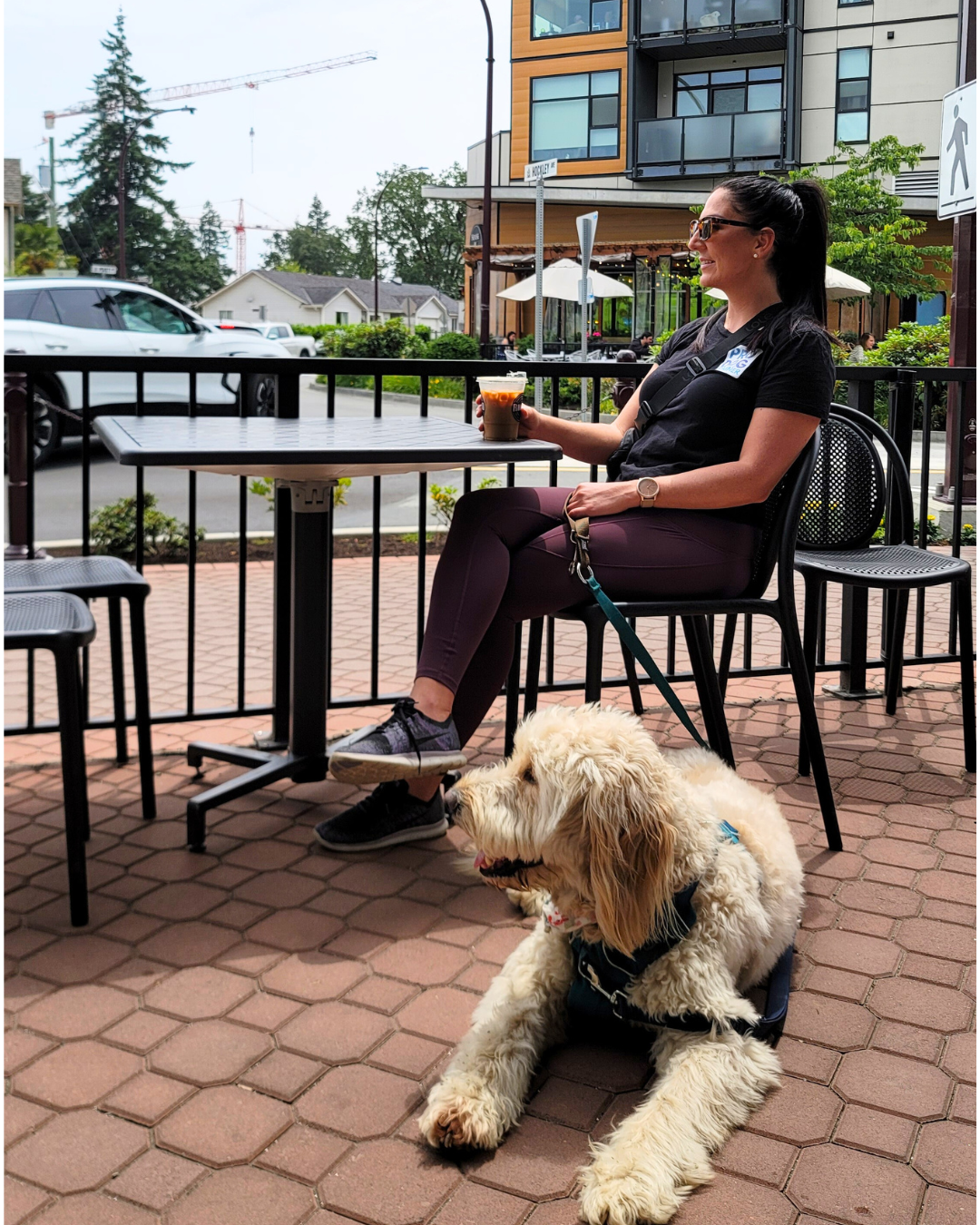
Beyond Obedience might be for you if...
Your dog doesn't need to be "perfect."
They might be sensitive. Easily overstimulated. Barky. Lungey. Distracted by absolutely everything. Or simply finding parts of our very busy human world harder than you'd like them to.
And you're not looking for a robot. You just want to be able to share your life with your dog.
You want to take a walk without the whole thing revolving around avoiding triggers.
You want friends to come over without spending the first 20 minutes managing your dog.
You want to sit on a patio and actually enjoy your coffee instead of monitoring everything happening three tables over.
You want to take your dog hiking, camping or to the beach and feel like you're doing it together — not spending the entire outing trying to get their attention back.
And when you're home?
You'd really like your dog to be able to switch off and just... hang out.
That's the life Beyond Obedience is designed to help you build.
Not a perfectly obedient dog.
A dog who has the skills to actually share more of your life with you.
Is Beyond Obedience right for you?
This is a great fit if:
✔ You've already tried training, but what your dog knows isn't translating reliably into real life
✔ You want to understand your dog's behaviour rather than simply stopping it in the moment
✔ You're willing to practise between sessions — even if that's only a few minutes at a time
✔ You're open to adjusting the plan when your dog tells us something is too difficult, rather than pushing through for the sake of obedience
✔ You want training that fits your actual life and your individual dog, rather than trying to make your dog fit a one-size-fits-all method
✔ You're ready to be part of the process. I'll coach you, troubleshoot with you and help you see the pieces you're missing — but you're the person who ultimately builds these skills with your dog.
This probably isn't the right fit if:
✖ You're looking for someone to “fix” your dog for you without your involvement
✖ You want an instant solution or guaranteed timeline for behaviour change
✖ You're looking for training based on punishment, dominance or pack hierarchy
✖ Your only goal is stopping the behaviour as quickly as possible, regardless of what your dog is communicating or experiencing.
✖ You're unwilling to make changes to your dog's routine, environment or expectations when those changes are part of helping them succeed
Not sure? You don't need to figure that out on your own.
That's exactly what the Behaviour Assessment is for. We'll talk through what's happening, what you've already tried and what you're hoping to change, and I'll tell you whether I think Beyond Obedience is the right next step — and which level of support I'd recommend.
My Committment to You
I take the outcomes of my clients seriously.
If you're showing up, doing the work and something isn't changing, I'm not going to keep handing you the same exercise and telling you to try harder.
We'll look at what's happening.
We'll adjust the difficulty. Change the environment. Look at what your dog is doing before, during and after the behaviour. Reconsider what might be contributing. And when necessary, bring other professionals into the conversation.
Because good behaviour work isn't about forcing one method to work.
It's about paying attention to the dog in front of us and adjusting when they tell us we need to.
If you complete your Beyond Obedience program, attend your coaching sessions and consistently apply the plan we've developed together, but we haven't seen meaningful improvement in the primary behaviour we've been working on, I'll provide an additional coaching session at no charge so we can reassess what's happening and determine what needs to change.
No repeating the same plan and hoping harder.
If something isn't working, we'll get curious about why.
A note about health and discomfort
Behaviour doesn't happen separately from the body.
Pain, discomfort and other medical factors can sometimes contribute to changes in behaviour, including reactivity, reluctance to move, difficulty settling, sensitivity to touch or a reduced ability to cope with everyday stress.
If I see something during our work that makes me concerned about a possible medical contribution, I'll let you know and may recommend discussing it with your veterinarian.
With your consent, I'll also send your veterinary team a brief behaviour report following our sessions. These reports focus on observable behaviour, relevant changes and patterns we've identified during training, giving your vet additional information about what your dog is doing outside the clinic and helping keep everyone working from the same picture.
Training and veterinary care have different jobs, but they don't have to happen in isolation.
Your dog's welfare will always be part of the plan.
The same Beyond Obedience approach.
Two levels of support.
Both options are designed to help you take the training out of practice sessions and into the moments where you actually need it.
The difference is how much individualized guidance you need while putting the training into practice.
— INVESTMENT —
PRIVATE IN-PERSON COACHING
More hands-on guidance
$1,297 CAD
or 3 × $465
5 × 45-min private sessions
Personalized recaps
Between-session support
6 months Membership
Best fit if: You want more real-time coaching and individualized support.
GUIDED IMPLEMENTATION
More independent, with expert feedback
$697 CAD
3 × 30-min Zoom sessions
Personalized video review
Focused written feedback
3 months Membership
Best fit if: You're comfortable implementing independently but want expert feedback and troubleshooting.
Not sure which level of support you need?
You don't have to figure that out on your own. During your Behaviour Assessment, I'll recommend the option I think makes the most sense for you and your dog.
Behaviour Assessment — $67

You head out for a walk and realize you're actually enjoying the walk.
You're not scanning every driveway for the next dog. You're not gripping the leash a little tighter because something appeared up ahead. And when your dog does notice something exciting, you know what to do — and your dog has the skills to come back to you.
You have friends over and you're able to sit down and be part of the conversation instead of spending the evening managing your dog.
You call your dog on a trail and watch them turn away from whatever had their attention and come racing back toward you.
Something unexpected happens — because something unexpected always happens — and instead of feeling that immediate oh no, you have options.
And at home, your dog can actually switch off.
They rest. You work. You make dinner. You watch TV. Dance with your partner in the ktichen.
Nobody needs to be training all the time.
That's ultimately what all of this work is for.
Not a dog who never gets excited, distracted, worried or overwhelmed.
Not perfect obedience.
More moments where you can trust your dog, your dog can trust you, and you get to actually enjoy your life together.
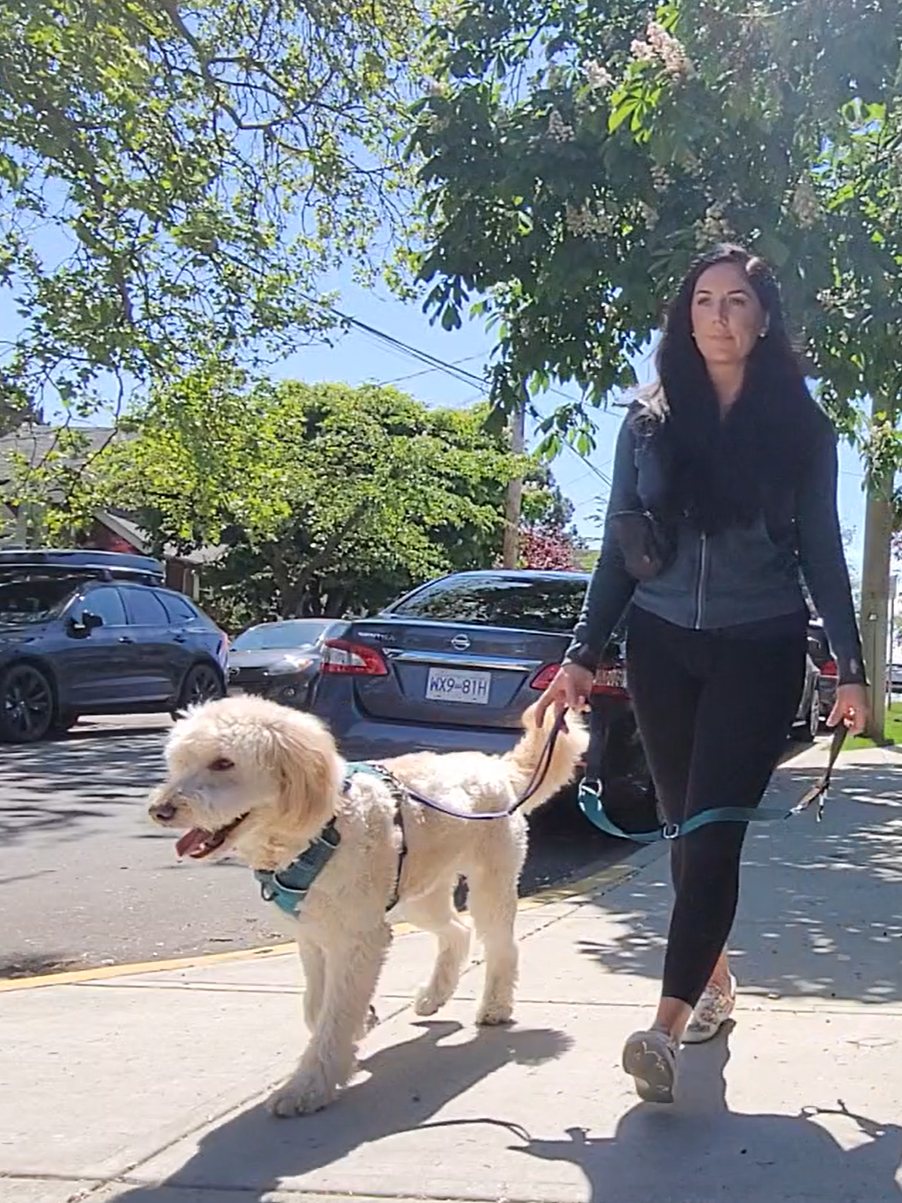
About Samaya
I started Mission Paws in 2020 as a dog hiking company.
And spending hours on the trail with groups of dogs gave me a front-row seat to something I hadn't expected.
More wasn't always better.
More exercise. More stimulation. More dog-dog play. More opportunities to “tire them out.”
For some dogs, all that more wasn't creating the calmer, happier dog everyone expected it to.
I knew this firsthand because I had one of those dogs at home.
Mr. Vince is my 60lb Goldendoodle, and according to basically everyone, he needed hours of exercise every day or he'd be impossible to live with.
So I tried it.
Two hours on the trail and he'd come home wired, wild and digging holes in our sheets.
Ten minutes playing training games in our condo courtyard?
Long, happy snooze.
Same dog. Completely different approach.
That experience changed the questions I started asking about dog behaviour — and eventually changed the entire direction of my business.
Before dogs, I spent years coaching humans through behaviour change in the fitness world: strength, nutrition, habits and mindset. And one thing that work taught me is that behaviour rarely changes simply because someone has been told what they're supposed to do.
Knowing what to do and being able to do it when life gets hard are two very different things.
Turns out, that's pretty relevant to dogs too.
It's why I'm much more interested in what happens around the behaviour than simply stopping the behaviour itself.
What happened before it? What made this situation harder than the last one? What can your dog do successfully right now? Where do things start falling apart? What changes when we adjust the environment, the difficulty or the way we're approaching the training?
And importantly: what is your dog telling us along the way?
That's the approach I bring to Beyond Obedience.
I won't expect your dog to behave perfectly in every situation. I won't keep asking you to push through something that clearly isn't working. And I won't hand you a generic training plan and tell you to practise harder.
I'll help you look at the dog in front of us, figure out where I'd start, and progressively build the skills that make the life you want together more possible.
I'll be honest about what I'm seeing, realistic about what behaviour change can take, and willing to adjust the plan when your dog gives us new information.
Credentials
Certified Professional Dog Trainer, Levels 1, 2 & 3 — Absolute Dogs (PDT)
Currently completing my Level 6 Ofqual Diploma in Clinical Applied Behaviour (Canine) — Canine Behaviour College
Advanced study under Dr. Tom Mitchell MRCVS in Dog-Dog Reactivity, Body Handling & Husbandry, and Separation Related Behaviours
6+ years working with dogs and their humans across Victoria BC, and virtually across Canada, USA, and UK
Relationship-first, reward-based, and grounded in behavioural science.
Frequently Asked Questions
-
In most cases, previous training focused on commands and obedience, getting the dog to perform a behaviour on cue. That approach can work in a controlled environment, but it doesn't build the underlying emotional regulation and cognitive skills a dog needs to make good choices when the world gets busy and distracting. It's the difference between teaching someone breathing exercises and actually helping them manage stress. One is a trick, the other is a skill.
Beyond Obedience works on the brain first. When a dog develops the capacity to stay calm, disengage, and think clearly under pressure, the behaviour starts to sort itself out. That's why clients who've tried other approaches often find this one lands differently.
-
It's not too late. The brain retains the ability to build new skills and new habits throughout a dog's life. This isn't about puppyhood, it's about giving the nervous system the right conditions to change. That takes consistency and time, but it's absolutely possible.
What matters most isn't the dog's age or history. It's whether the owner is ready to do things a little differently. That's always been the real variable.
-
That depends on what you're comparing it to. If you've already spent money on group classes, online courses, or training tools that haven't moved the needle, then more of the same isn't the answer. Beyond Obedience is a structured, personalized program built around your specific dog and what's actually driving their behaviour, not a generic framework applied to every dog that walks through the door.
The behaviour assessment alone gives you a clear picture of what's going on and a concrete plan for what to do next, whether you continue with the full program or not. Most clients find that clarity alone is worth it.
-
Less than you'd think, and far less than what you're currently spending managing behaviour on every walk, every visit, every outing. The training itself is built into real life. Short, practical sessions that fit into time you already spend with your dog, rather than adding a whole new task to it.
The goal is to make your life easier, not busier. If anything, clients usually tell me they feel relief early on, because they finally understand what's happening and have something concrete to do about it.
-
Yes, and that's actually a good thing to know upfront. Beyond Obedience works because the changes happens between sessions, not just during them. I'll give you a personalized session recap after every appointment with specific homework tailored to your dog, curated video references, and context for why we're doing what we're doing.
You don't need to be a dog trainer. You just need to be willing to show up consistently and try things a different way. If that sounds like you, we'll get on well.
-
Both. In-person sessions are available in Victoria, BC and the surrounding area. Virtual sessions via Zoom are available across Canada and the USA. Many clients find a combination of both works well depending on where they are in the program.
If you're not sure which format suits your situation, that's something we can figure out together during the behaviour assessment.
You've tried the tips. You've done the classes. You've watched the videos.
And your dog is still struggling, not because you haven't tried hard enough. Because every solution you've found so far has been aimed at the behaviour itself, and the behaviour is downstream of the real problem.
The leak is further upstream. And until someone helps you find it, you'll keep bailing water.
That's exactly what the Behaviour Assessment is for. In 45 minutes, we build a precise picture of what's actually driving your dog's behaviour — not just what it looks like on the surface — and you leave with a clear, concrete plan for what to do next. Whether you continue with Beyond Obedience or not, that clarity is yours to keep.
If you've been waiting for someone who actually gets to the root of it, you've found her.
Book your Behaviour Assessment below and let's find the leak.